
 Fast Delivery
  Global Compliance
  Long Term Support
A domestic refrigerator is designed for food, not for temperature-sensitive vaccines and medicines. When you’re storing products that must remain effective and safe, the “best medical fridge” is the one that can maintain a stable target temperature, recover quickly after door openings, and support monitoring and documentation for your cold chain processes.
This guide explains the main types of medical-grade refrigerators, what each is best for, and the key features that matter most; so you can choose the right medical refrigerator for your facility, whether you buy direct or through a distributor.
How to Choose the Best Medical Fridge
Before choosing a unit, start with these questions:
What exactly are you storing? Vaccines and refrigerated medicines often have specific storage requirements set by the manufacturer, and these requirements can vary by product.
What temperature range must be maintained? For many vaccines, it is recommended they are stored between +2°C and +8°C to maintain effectiveness (UK GOV).
How will you monitor and evidence compliance? Good practice includes routine monitoring and acting immediately if temperatures go out of range; data loggers can help provide detailed evidence, but routine checks still matter day-to-day.
What operational features reduce risk? Pharmaceutical refrigerators typically rely on fan-circulated air to support a uniform internal temperature profile and faster pull-down after door openings; security (locks) and alarms can also improve control and response.
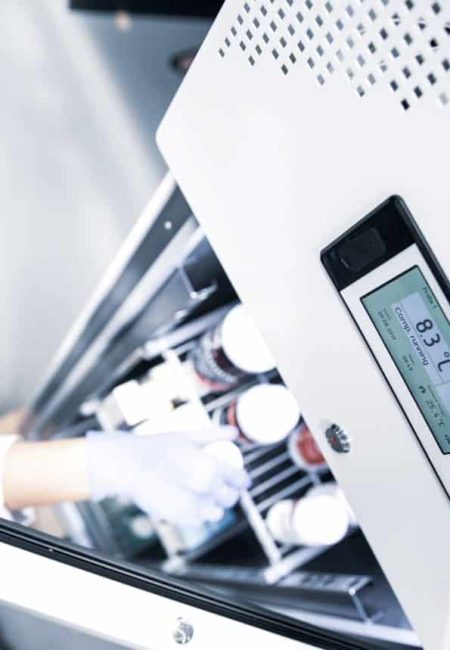
What is a Medical-Grade Refrigerator?
A medical-grade refrigerator (sometimes called a pharmaceutical refrigerator or vaccine fridge) is specialised cold storage, used to keep temperature-sensitive products (such as vaccines and refrigerated medicines) within safe limits. In regulatory contexts, the focus is not the label on the door, but whether the unit can maintain suitable storage conditions and support monitoring and control.
Why a Medical Fridge Instead of a Domestic Fridge?
In MHRA guidance for refrigerated medicinal products, a pharmaceutical refrigerator is described as using fan-circulated air to deliver a more uniform temperature profile and rapid recovery after door openings, with monitoring that can be read without opening the door; locks and alarms may also be relevant depending on risk and setting (UK GOV).
In short: if you are storing vaccines or medicines, you are managing a cold chain; so stability, monitoring, and response matter as much as setpoint temperature.
Types of Medical Fridges Available
Pharmacy / Pharmaceutical Refrigerators
A pharmacy refrigerator is typically used for vaccines and refrigerated medicines that must stay within a controlled refrigerator range (often referenced as +2°C to +8°C for many vaccines, subject to manufacturer guidance).
These units are commonly chosen for clinics, pharmacies, hospital medication rooms, and vaccination services.
Best for: vaccines, refrigerated medicines and temperature-sensitive pharmaceuticals.
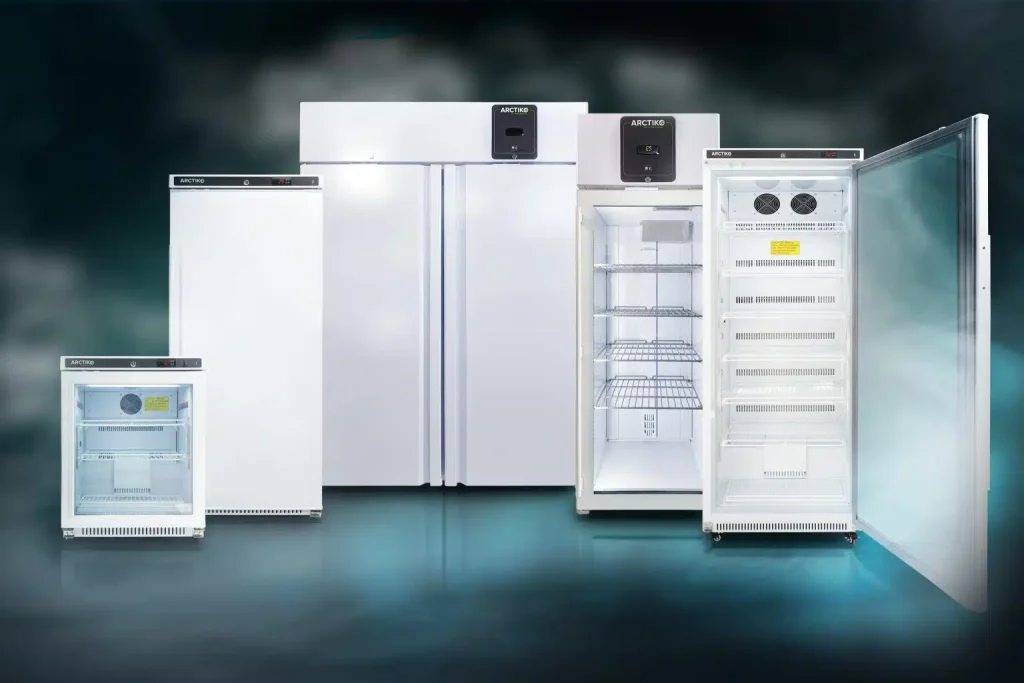
Biomedical / Laboratory Refrigerators
Biomedical or laboratory refrigerators are used for temperature-sensitive materials that need controlled cold storage (including some medical supplies, reagents, and biological items depending on the environment). They are often selected based on stability, airflow design, storage layout, and the monitoring/audit requirements of the organisation.
Best for: life sciences environments that need controlled cold storage and documentation.
Blood Bank Refrigerators
Blood cold storage is a specialised area with its own standards and equipment choices. If your facility stores blood components, make sure your equipment matches the required storage conditions for the specific component (requirements differ). For example, NHSBT notes red cells are stored at 2–6°C, while platelets are stored at 20–24°C (not in a refrigerator) (NHS Blood and Transplant).
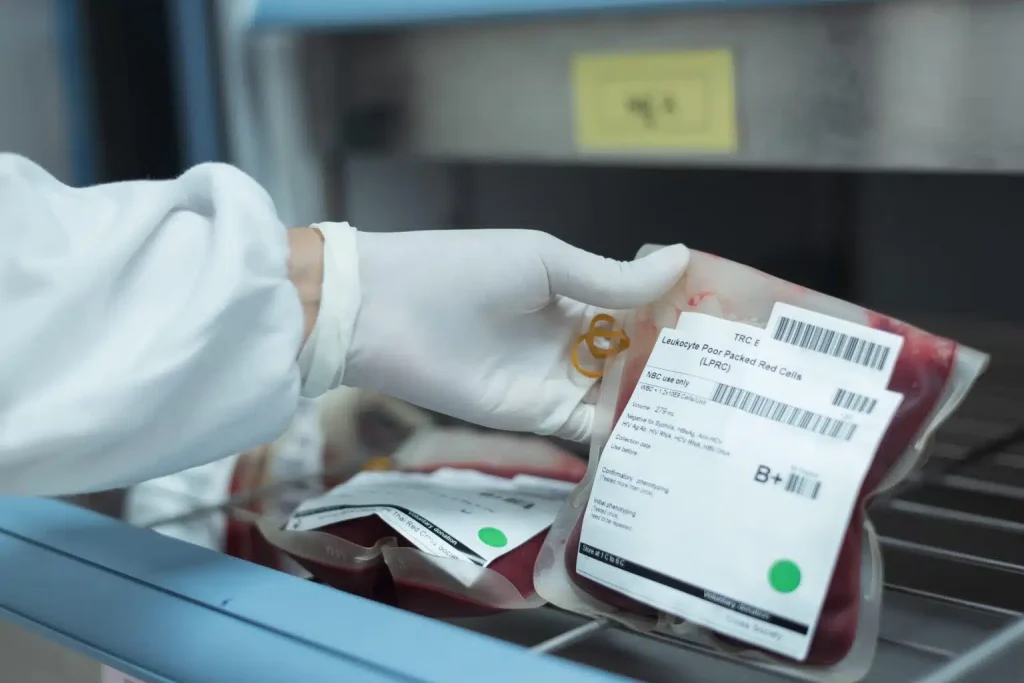
Best for: blood-component storage workflows where dedicated blood storage equipment is required.
Combi Medical Refrigerators
Combi units offer refrigerated and frozen storage zones in one cabinet footprint. They can be useful where space is limited and your workflow genuinely requires both temperature zones close at hand.
Best for: mixed storage needs in a constrained footprint.
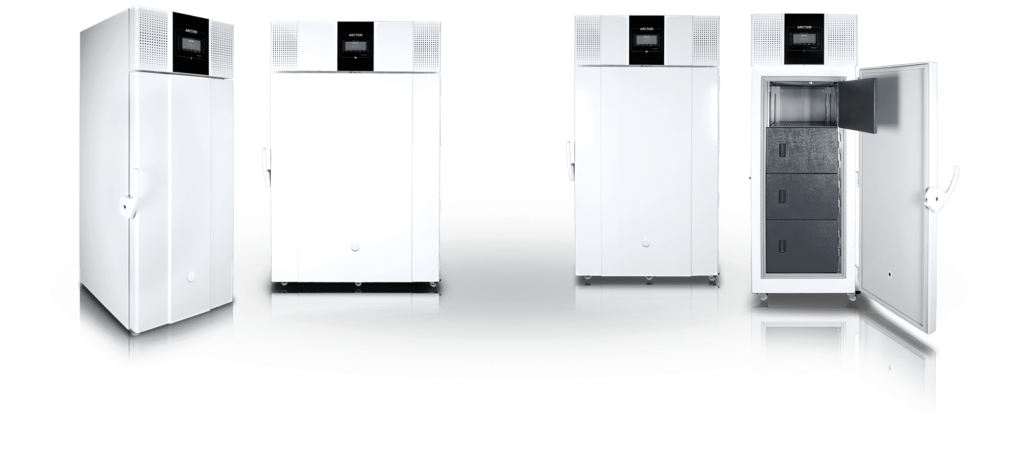
Medical Freezers and Ultra-Low Temperature Storage
Some vaccines and biologics may require frozen or ultra-cold storage depending on the product and programme; CDC publishes separate storage temperature resources covering refrigerated, frozen, and ultra-cold vaccine storage (US GOV – CDC).
If your workflow includes these requirements, your “best medical fridge” decision may actually be a freezer decision (or a fridge + freezer system decision).
Best for: frozen programmes, biologics, and specialised cold chain needs.
What Features Matter Most for Vaccines and Medications?
Temperature Stability and Recovery After Door Openings
For vaccine and medicine storage, it’s not enough to “hit the setpoint.” You want a unit designed to support a uniform internal temperature profile and to recover quickly after access; features MHRA flags as relevant for pharmaceutical refrigerators (UK GOV).
Monitoring, Data Logging and Audit Readiness
CQC guidance highlights daily monitoring routines and the importance of acting on out-of-range events; it also describes how data loggers can be useful, but do not remove the need for regular checks (UK Care Quality Commission).
ARCTIKO supports a dual-approach to monitoring depending on model and operational preference: some refrigerator ranges include integrated data logging, and ARCTIKO also offers add-on monitoring solutions through trusted brands such as EasyLog, LogTag and ATI.
Security and Access Control
Locked storage can matter for controlled medicines, high-value stock, and governance. MHRA notes that pharmaceutical refrigerators can be locked and may include alarm options depending on needs.
ARCTIKO’s medical refrigerator positioning also highlights key lock security as a feature within its medical refrigerator offering (model dependent).
How ARCTIKO Fits into a “Best Medical Fridge” Decision
ARCTIKO positions itself around specialist, high-performance cold storage for medical and life science environments, and publishes its certification and compliance posture (including ISO 13485:2016 and ISO 9001:2015) as part of its manufacturing quality framework.
For monitoring, ARCTIKO offers both integrated data-logging on selected medical refrigerator models and external monitoring options via EasyLog/LogTag/ATI, supporting different budget and compliance setups.
For applications where redundancy is critical (particularly in selected ultra-low temperature, blood bank, and cryogenic ranges), ARCTIKO’s TRUE DUAL™ concept is designed around independent cooling cycles so that, in the unlikely event one fails, the other can act as backup to help protect stored materials.
If you’re choosing a medical refrigerator for vaccines and medications, the “best” choice depends on your exact storage range, monitoring expectations, and workflow. ARCTIKO (or your local ARCTIKO distributor) can help you match your requirement to the right cabinet size, door type, monitoring approach, and performance level.